 |  |  |
|---|---|---|
 |  |  |
 |  |  |
 |  |  |
THE SECOND LIFE OF SAREE
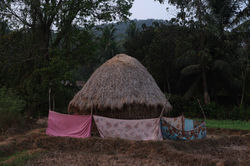
While walking through the fields of Sindhudurg at twilight, I was struck by the visual contrast of soft, brightly colored sarees framed against the rugged, lush green landscape. Upon questioning local farmers, I discovered that these fences serve a critical dual purpose. The increasing population of Indian Bison (Gaur), wild pigs, and stray cattle posed a threat to crops. Farmers found that the vibrant, fluttering fabric of old sarees acted as a highly effective visual deterrent to keep these animals away. In a world of "high-tech" solutions, these fences represent a "zero-waste" philosophy—repurposing discarded textiles into functional agricultural infrastructure.
Beyond the utility of the fence lies a deeper social narrative. I noted that a single farmer rarely has enough old sarees to fence an entire field. The materials are gathered through a collective effort. Farmers collect worn-out sarees from their wives, mothers, and sisters. Neighbors donate their old garments to help protect a fellow villager’s livelihood. The fences, therefore, are not just physical barriers; they are woven from the emotional history and shared support of the community. Each fence is a patchwork of domestic memories—weddings, festivals, and daily labor—reimagined as a guardian of the land.